Why Do We Keep Doing What We Know We Shouldn’t? Impaired Midfrontal–Motor Theta Synchronization Reveals the Computational Neural Mechanism Underlying the “Knowing–Doing Gap” in Obsessive-Compulsive Disorder
On September 1, Professor Chen Qi’s research team from the School of Psychology at Shenzhen University published a research article online in PLOS Biology , entitled “Impaired midfrontal-motor theta phase synchronization characterizes maladaptive motivational behavior in people with obsessive-compulsive disorder”. The study recruited “36 individuals with obsessive-compulsive disorder (OCD)” and “37 healthy controls”. By combining a “motivational Go/NoGo paradigm, electroencephalography (EEG), and computational modeling”, the researchers systematically investigated the computational and neural mechanisms underlying a core clinical feature of OCD: “knowing that a behavior is unreasonable, yet still finding it difficult to stop”.
People with OCD are often aware that repetitive behaviors such as checking, washing, seeking reassurance, or ordering are excessive or unnecessary, yet they may still struggle to resist behavioral urges driven by anxiety, a sense of threat, or feelings of incompleteness. This phenomenon—"knowing cognitively that one should not act, while nevertheless finding it difficult to stop behaviorally”—is a prominent clinical characteristic of OCD and is often described as a “knowing–doing gap”. Previous research has largely attributed this phenomenon to weakened goal-directed control or an enhanced habit system. However, a more fundamental question remains unanswered: Do individuals with OCD fail to recognize that their behavior has deviated from their current goals, or do they detect the conflict but struggle to translate this information into effective action control in a timely manner ?
To address this question, the researchers employed a “motivational Go/NoGo learning task”(Figure 1). Participants learned the correct responses associated with different cues in order to obtain rewards or avoid losses. Reward cues typically promote action, whereas punishment cues tend to elicit stopping or avoidance responses. However, when these automatic response tendencies conflict with task rules—for example, when participants must “withhold a response to obtain a reward but respond to avoid a loss”—they must overcome these automatic tendencies and make choices according to the rules they have learned.
The researchers then applied a “Hierarchical Bayesian Reinforcement Learning Model” to determine whether erroneous choices under conflict arose from “Pavlovian response tendencies directly elicited by reward or punishment cues”, or from “instrumental learning processes through which action values are updated based on outcome feedback”. The researchers further combined computational modeling with EEG analyses to examine whether the brain could detect conflicts between Pavlovian response tendencies and task goals, and whether the control signals generated after conflict detection could be effectively transmitted to the motor system before the behavioral response.
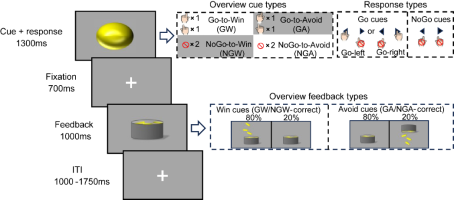
Figure 1. Motivational Go/NoGo Learning Task and Experimental Procedure
1. Individuals with OCD Know How They Should Respond, Yet Remain Vulnerable to Automatic Motivational Tendencies
Behavioral results showed that both individuals with OCD and healthy controls gradually learned the correct responses associated with different cues, indicating that participants with OCD were able to understand and learn the task rules. However, computational modeling revealed that, compared with healthy controls, individuals with OCD exhibited a “stronger Pavlovian bias and a lower learning rate”. In other words, reward and punishment cues were more likely to directly drive their responses, while their efficiency in updating action choices based on outcome feedback was reduced. This computational profile of “cue-driven responding and rigid updating”*meant that even after learning the correct rules, individuals with OCD remained more likely to make goal-incongruent choices under conflict.
2. Individuals with OCD Can Detect Conflict, but Their Control Signals Fail to Influence Behavior in Time
EEG results showed that when automatic response tendencies conflicted with task demands, both the healthy control and OCD groups exhibited “increased midfrontal theta activity”, with greater midfrontal theta power associated with higher levels of conflict. Computational modeling further showed that midfrontal theta activity not only reflected conflict detection, but that increases in theta activity were also associated with a greater contribution of “instrumental action values” to choice. This suggests that midfrontal theta activity signals an increased need to strengthen goal-directed control. Importantly, individuals with OCD were not only able to detect conflict but were also able to generate a neural signal indicating that “greater control was needed” during conflict.
Notably, although the two groups did not differ in the magnitude of midfrontal theta activity, they showed a critical difference in its “temporal dynamics” (Figure 2).In healthy controls, conflict-related theta enhancement occurred primarily “before the behavioral response”, helping to proactively suppress automatic response tendencies and support goal-directed choice. In contrast, in individuals with OCD, theta enhancement persisted into the response period, while stable conflict-related pre-response theta activity was absent. In other words, individuals with OCD did not necessarily fail to detect conflict; rather, their control signals “emerged or exerted their influence too late to effectively regulate behavior before action output”.
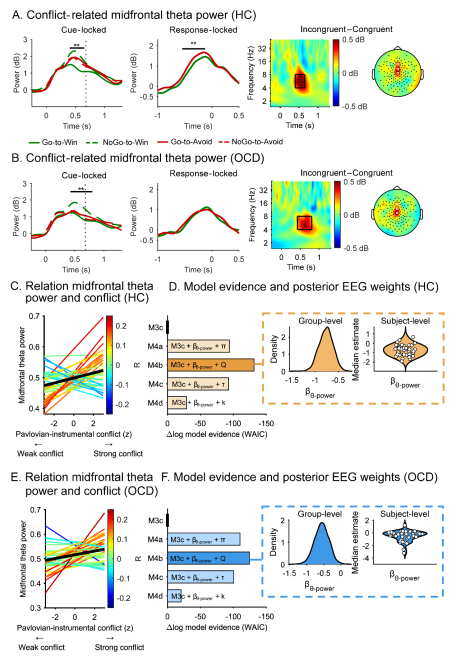
Figure 2. Temporal Dynamics of Conflict-Related Midfrontal Theta Activity and Results of Computational Modeling
3. Abnormal Midfrontal–Motor Theta Synchronization Provides a Neural Mechanism for the “Knowing–Doing Gap” in OCD
Brain-network analyses revealed a key pathway underlying the disconnect between “knowing” and “doing” in OCD. Under motivational conflict, both groups exhibited enhanced “midfrontal–lateral prefrontal theta phase synchronization”, indicating that individuals with OCD remained capable of transmitting conflict-related information to prefrontal regions responsible for goal representation. In contrast, individuals with OCD did not show a reliable conflict-related increase in “midfrontal–motor theta phase synchronization”. Computational modeling further revealed that although midfrontal–lateral prefrontal theta synchronization was abnormal in individuals with OCD, they nevertheless continued to rely on this pathway to regulate motivational bias. Accordingly, healthy controls exhibited a coordinated and complementary regulatory pattern (Figures 3A and 3C, left). Enhanced “midfrontal–lateral prefrontal theta synchronization” increased the contribution of instrumental action values to choice, thereby strengthening rule maintenance; meanwhile, enhanced “midfrontal–motor theta synchronization” suppressed cue-elicited Pavlovian response tendencies, reducing impulsive errors. Individuals with OCD, however, did not exhibit this complementary relationship (Figures 3B and 3C, right). Some participants weakened the influence of instrumental action values while suppressing Pavlovian response tendencies, whereas others increased the influence of instrumental action values while simultaneously amplifying Pavlovian bias.
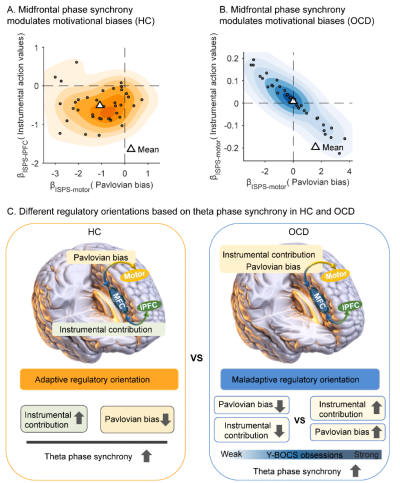
Figure 3. Modulatory Patterns of Midfrontal Theta Phase Synchronization on Motivational Bias
Taken together, the “knowing–doing gap” in OCD may arise from a decoupling between preserved conflict detection and impaired action inhibition. This finding advances our understanding of the core dysfunction in OCD from abnormalities in individual brain regions to impaired coordination across control networks. It also suggests that future neuromodulation research may move beyond focusing solely on local brain regions and instead consider long-range midfrontal–motor rhythmic synchronization as a potential therapeutic target.
Pang Yu, a doctoral student in Professor Chen Qi's team from the School of Psychology at South China Normal University, and Zhou Dongsheng from the Affiliated Kangning Hospital of Ningbo University are co-first authors of the paper. Professor Chen Qi from the School of Psychology at Shenzhen University is the corresponding author. This research was supported by the National Science and Technology Innovation 2030 Major Project on Brain Science and Brain-Inspired Intelligence Technology, as well as the National Natural Science Foundation of China.
Pang, Y., Zhou, D., Peng, Z., Liu, W., Huang, R., Seger, C. A., & Chen, Q. (2026). Impaired midfrontal-motor theta phase synchronization characterizes maladaptive motivational behavior in people with obsessive-compulsive disorder. PLOS Biology, 24(9), e3003979.
https://doi.org/10.1371/journal.pbio.3003979