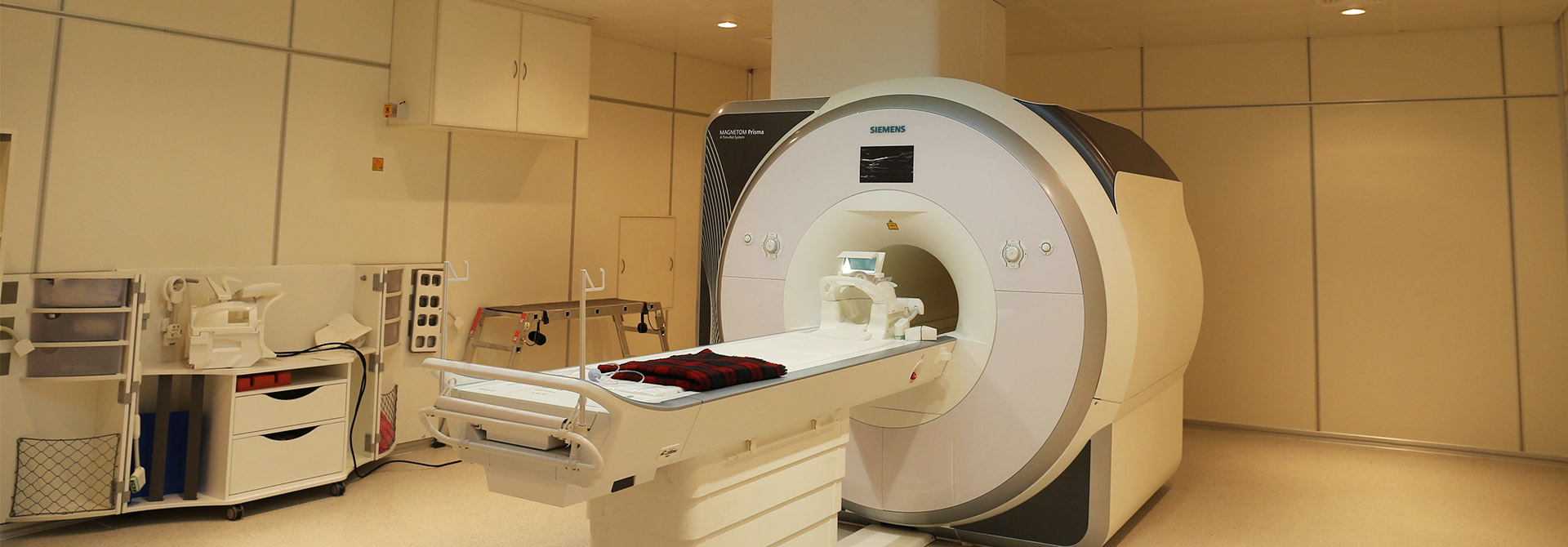
Recently, a research team led by Professor Guan Qing and Associate Professor Tao Wuhai from the School of Psychology at Shenzhen University published a research paper titled "Compensatory and impaired trust updating in mild cognitive impairment: Evidence from computational modeling and fMRI" in the top-tier international neuroimaging journal NeuroImage(IF=4.5). The study innovatively combined a multi-round trust game, computational modeling, and functional magnetic resonance imaging (fMRI) to investigate the characteristics of dynamic trust updating in social interactions among older adults with mild cognitive impairment (MCI) and its underlying neural mechanisms. The research provides important computational and neuroscientific evidence for understanding the social vulnerabilities (such as susceptibility to deception and financial exploitation) faced by individuals with MCI.
1.Research Background
As a transitional state between normal aging and dementia,MCI involves not only deficits in general cognitive functions but may also be accompanied by significant social dysfunction. Individuals with MCI show heightened susceptibility to deception and a tendency toward social withdrawal. The dynamic updating of trust, a key process regulating interpersonal relationships and social security, plays a crucial role in this context. However, it remains unclear how individuals with MCI dynamically adjust their trust based on experience during social interactions, as well as the corresponding alterations in the underlying neural circuits. To address this research gap, this study combined a multi-round trust game paradigm with computational modeling, complemented by task-based fMRI, aiming to uncover the computational-behavioral characteristics and neural activity patterns in older adults with MCI during interactions with partners of varying cooperative preferences.
2.Research Methods
This study integrates three core methodological approaches: behavioral experiment, computational modeling, and functional neuroimaging.
1. Multi-round Trust Game Paradigm
Thirty-nine older adults with MCI and 45 normal healthy control (NHC) older adults were recruited. Participants performed a trust game task while undergoing fMRI scanning, engaging in repeated investment-and-return interactions with virtual partners with different feedback probabilities, representing “cooperative” and “non-cooperative” interaction styles.
2. Computational Modeling Analysis
A belief-based reinforcement learning model was employed to simulate the dynamic evolution of participants’ trust behavior. Latent variables such as learning rates, prediction errors (PE), and interference factors were precisely estimated to quantify the operation of core trust components, including emotional, motivational, social, and executive-cognitive processes.
3. Neuroimaging Investigation of Neural Mechanisms
Using model-based fMRI analysis and psychophysiological interaction (PPI) analysis (Figure. 1), the study examined brain activation patterns during feedback and decision stages, with a particular focus on how computational parameters (e.g., prediction errors) dynamically modulate regional brain activity and functional network connectivity.
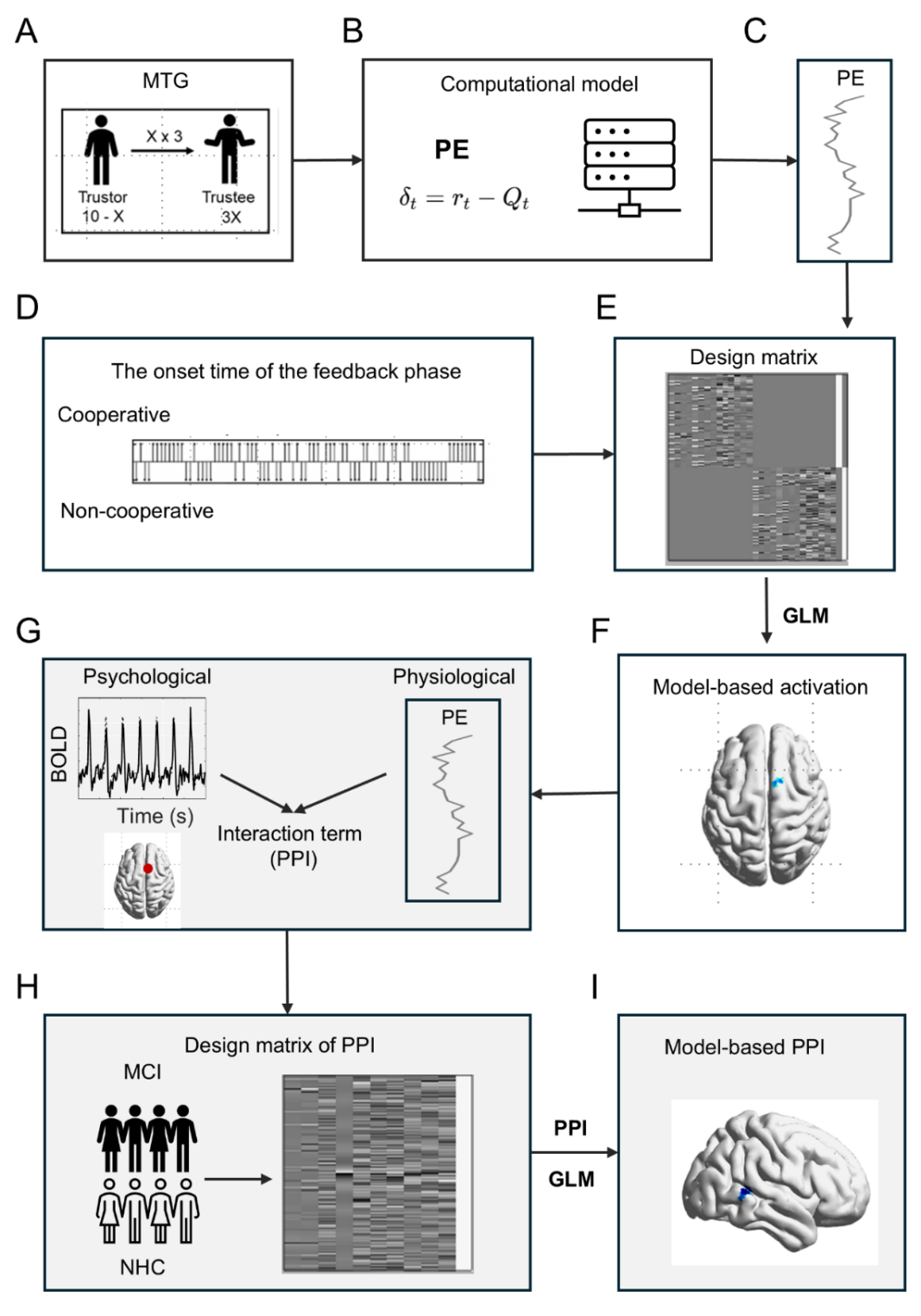
Figure 1. Flowchart of Model-Based Activation and Psychophysiological Interaction (PPI) Analyses
3.Research Findings
1. Neural Compensatory Mechanisms in Cooperative Interactions. fMRI results revealed that, when processing feedback from cooperative partners, the MCI group exhibited stronger activation and stronger prediction error (PE)-modulated activation in regions of the central executive network (e.g., right middle frontal gyrus) and the default mode network (e.g., right precuneus and angular gyrus, the latter overlapping with the temporoparietal junction, TPJ) compared with the normal healthy controls (Fig. 2B). This suggests that, in supportive, low-risk social interactions, individuals with MCI are able to recruit additional executive-control and social-cognitive neural resources as a compensatory mechanism, thereby maintaining normal cooperative behavior.
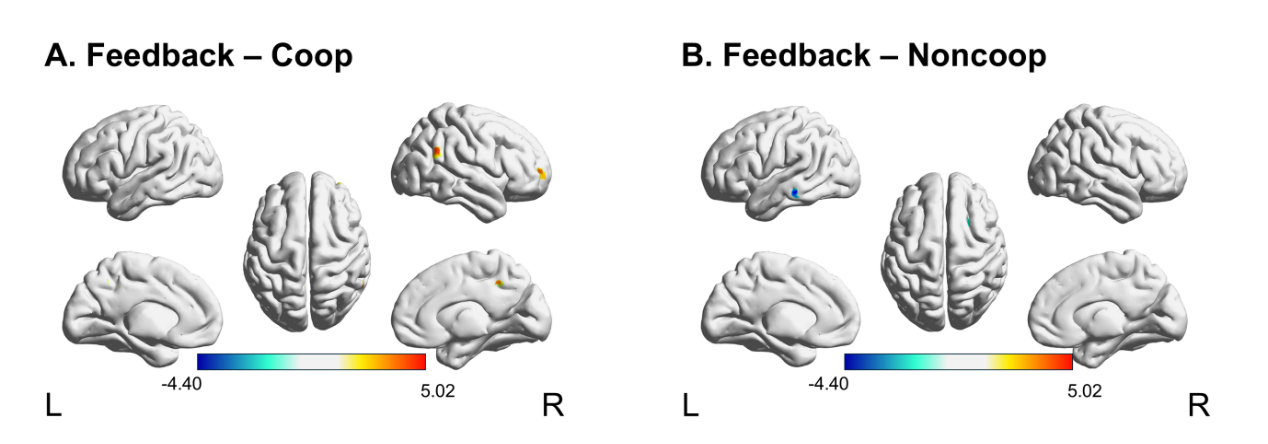
Figure 2. Group Differences in Brain Activation During the Feedback Phase of the Multi-Round Trust Game.
2. Slowed Trust Updating in Non-Cooperative Contexts. Behavioral and modeling results showed that, when interacting with a cooperative partner, individuals with MCI and healthy controls exhibited similar levels of trust behavior and learning rates. In contrast, when interacting with a non-cooperative partner, the MCI group displayed a slower reduction of trust, larger prediction errors (PE), lower learning rates, and greater cognitive interference between different partners. Moreover, during interactions with a non-cooperative partner, MCI individuals showed significantly reduced activation in brain regions associated with social and executive cognition (e.g., right superior frontal gyrus, left middle temporal gyrus, and inferior frontal gyrus; Fig. 2B), and their decreased learning rates were linked to activity in the left middle frontal gyrus (Fig. 3). This indicates that, when confronted with exploitation or betrayal, the compensatory neural mechanisms for trust updating in MCI individuals break down, impairing their ability to effectively integrate negative feedback to adjust their trust expectations.
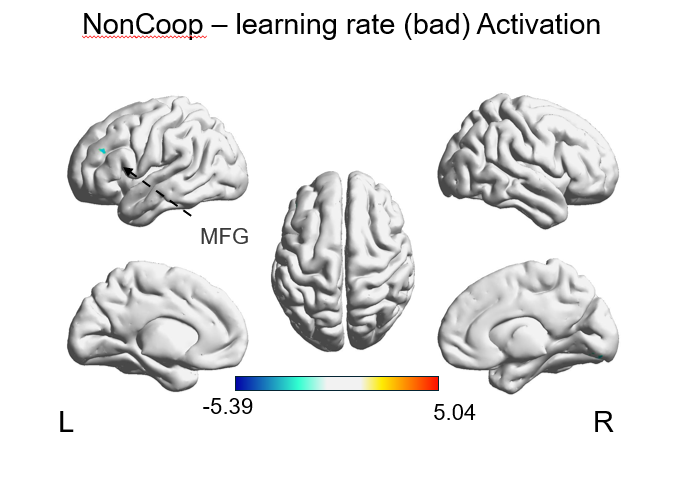
Figure 3. Group Differences in the Neural Correlates of Learning Rates During Non-Cooperative Interactions.
3. Prediction Error (PE)-Modulated Activation and Functional Connectivity. In cooperative contexts, individuals with MCI demonstrated stronger PE-modulated activation in the right fusiform gyrus (Fig. 4A). In non-cooperative contexts, the MCI group exhibited significantly reduced activation in the right superior frontal gyrus (SFG, a core region of the central executive network; Fig. 4B), as well as significantly weakened functional connectivity between this region and the right temporoparietal junction (TPJ, a key hub for social cognition; Fig 4C). These findings suggest that, when facing threats of betrayal, older adults with MCI are unable to effectively recruit and coordinate the social-cognitive system through the executive network, leading to a failure in expectation-updating mechanisms.
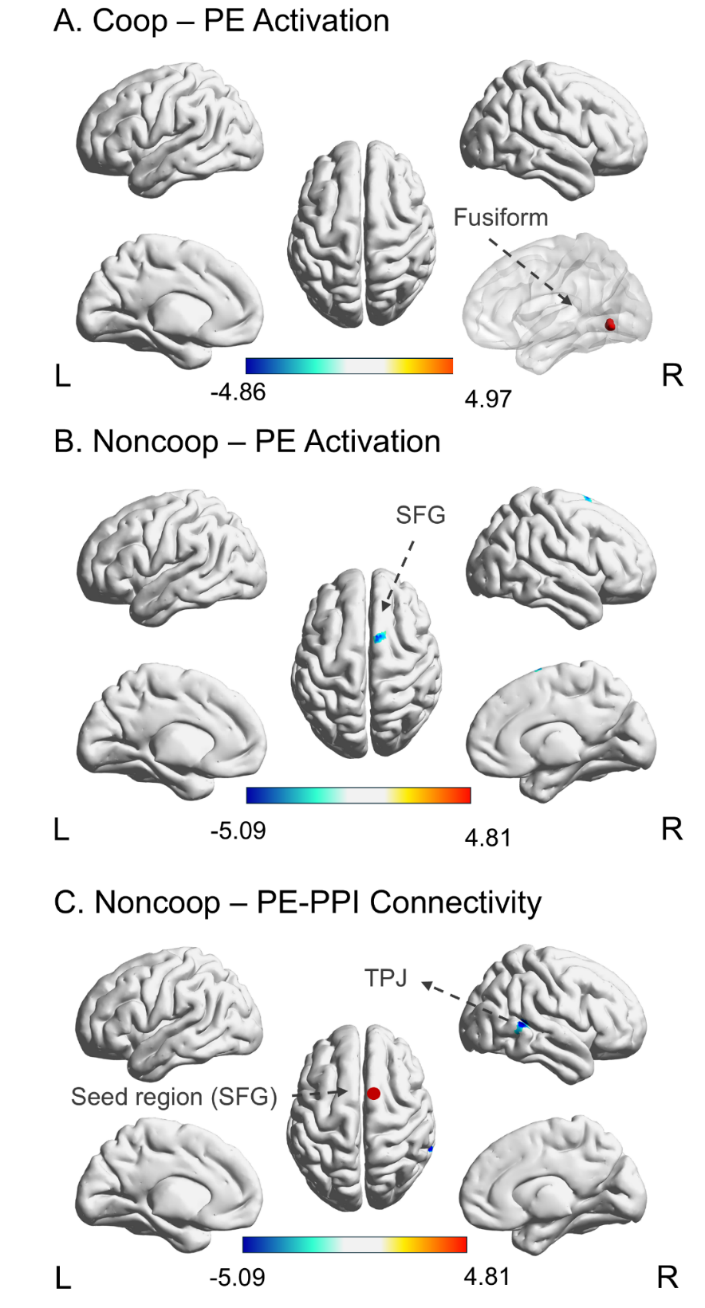
Figure 4. Results of PE-Modulated Activation and Group Differences in Psychophysiological Interaction (PPI) Analysis.
4.Research Conclusions
This study is the first to reveal the dual neural profiles of older adults with MCI during dynamic trust updating: in cooperative social contexts, they retain neural compensatory capacity to maintain interpersonal interactions, but in high-risk, non-cooperative environments, they exhibit impaired trust learning, reduced neural network activation, and weakened functional connectivity. The underlying mechanism of this inability to effectively transform “betrayal risk” into “expectation updating” in adverse interactions may be a core factor contributing to increased social vulnerability and susceptibility to deception in individuals with MCI. These findings provide a scientific basis for early identification of social dysfunction in older adults with cognitive decline and offer novel insights for designing social intervention policies aimed at preventing financial exploitation in the elderly population.
5.Author Contributions
The School of Psychology at Shenzhen University is the first affiliation of this paper. Yiqi Chen, a Ph.D. candidate jointly trained by Shenzhen University and the University of Mannheim, is the first author of the paper. Professor Guan Qing and Associate Professor Tao Wuhai from the School of Psychology at Shenzhen University are the co-corresponding authors. Dr. Hao He from the South China Business College, Guangdong University of Foreign Studies, Master’s graduate Yiyang Ding, and Professor Frank Krueger from the University of Mannheim have made significant contributions to this study. We also thank the Shenzhen University Magnetic Resonance Imaging Center for equipment support. This research was funded by the National Key R&D Program of China (Brain Science and Brain-like Intelligence Technology - National Science and Technology Major Project), the National Natural Science Foundation of China, the Guangdong Basic and Applied Basic Research Foundation, the Shenzhen-Hong Kong Institute of Brain Science Innovation, and projects from the Shenzhen Science and Technology Innovation Commission.
Our research group has been dedicated to the field of cognitive aging and neurodegenerative diseases for over a decade. Over the past four years, we have focused on the social functions of older adults and individuals with cognitive impairments, systematically revealing the progressive deterioration of social decision-making in cognitive aging. Our work has shown that trust tendencies in healthy older adults primarily rely on social rationality (default mode network, DMN) rather than economic rationality (central executive network, CEN). However, individuals with MCI lose the protective support of the DMN, and their resting-state trust networks are significantly affected by abnormal connectivity with the salience network (SAN). Structural neuroimaging further indicates that atrophy in the thalamus and anterior insula (core regions of the SAN) directly leads to abnormally heightened "affective sensitivity" to betrayal in MCI individuals, resulting in decreased trust tendencies. Finally, in this study, computational modeling and fMRI revealed that when facing betrayal, older adults with MCI show functional abnormalities in executive and social cognition, hindering their ability to convert betrayal risks into negative reciprocal expectations. These findings provide profound insights into the underlying mechanisms of the social vulnerabilities observed in individuals with MCI, such as interpersonal difficulties and susceptibility to financial fraud. In the future, we aim to translate these neural and behavioral markers into early clinical warning signs and social anti-fraud interventions, offering robust support for safeguarding the social security of older adults.
6.References
Chen, Y., He, H., Ding, Y., Tao, W., Guan, Q., & Krueger, F. (2026). Compensatory and impaired trust updating in mild cognitive impairment: Evidence from computational modeling and fMRI. NeuroImage, 121956, https://doi.org/10.1016/j.neuroimage.2026.121956.
Chen, Y., He, H., Ding, Y., Tao, W., Guan, Q., & Krueger, F. (2025). Linking gray matter structure to trust in mild cognitive impairment: A voxel-based morphometry study. Cerebral Cortex, 35(7), https://doi.org/10.1093/cercor/bhaf140.
Chen, Y., He, H., Ding, Y., Tao, W., Guan, Q., & Krueger, F. (2024). Connectome-based prediction of decreased trust propensity in older adults with mild cognitive impairment: A resting-state functional magnetic resonance imaging study. NeuroImage, 292, 120605, https://doi.org/10.1016/j.neuroimage.2024.120605.
Chen, Y., He, H., Lin, W., Yang, J., Tan, S., Tao, W., ... & Krueger, F. (2023). The connectome‐based prediction of trust propensity in older adults: A resting‐state functional magnetic resonance imaging study. Human Brain Mapping, 44(11), 4337-4351, https://doi.org/10.1002/hbm.26385.