Professor Peng Weiwei’s research team has published a paper titled “Modulating empathy with tDCS: dissociable roles of rTPJ and lDLPFC” in the international journal Psychological Medicine. Using high-definition transcranial direct current stimulation (HD-tDCS) to target the right temporoparietal junction (rTPJ) and the left dorsolateral prefrontal cortex (lDLPFC), the study reveals that the rTPJ promotes cognitive empathy and enhances the recognition of others’ emotional states, while the lDLPFC primarily modulates autonomic emotional responses. The two brain regions play dissociable yet complementary roles in empathic processing.
1.Research Background
Empathy, as the foundation of human social interaction, involves a complex process of understanding others’ states and regulating one’s own emotions. Neuroimaging studies have identified that the rTPJ plays a key role in perspective-taking, while the lDLPFC is closely associated with emotion regulation. However, direct evidence from neuromodulation remains limited. This study aims to bridge this gap by precisely modulating these brain regions with HD-tDCS to elucidate their distinct contributions to different dimensions of empathy. The study hypothesizes that the rTPJ primarily supports other-oriented empathy (e.g., perspective-taking and emotion understanding), while the lDLPFC mainly regulates self-oriented empathy (e.g., emotion regulation and distress reduction). Employing a multi-context, multi-modal approach, this study integrates behavioral metrics, central neural electrophysiological signals (EEG), peripheral physiological signals (ECG), and machine learning decoding to evaluate the “readability” of empathic states.
2.Research Methods
Two complementary empathy paradigms were combined with multimodal physiological recordings and computational decoding to comprehensively investigate the roles of the rTPJ and lDLPFC in empathy. As illustrated in Figure 1a (Study 1), participants completed a static pain empathy task immediately following real or sham tDCS targeting the rTPJ or lDLPFC, with EEG recording to capture rapid, stimulus-driven neural empathic responses. Figure 1b (Study 2) depicts participants watching ecologically valid autobiographical narrative videos before and after tDCS, with ECG monitoring to assess emotion understanding and autonomic regulation during sustained empathic engagement. By employing different temporal scales and stimulus modalities (static images vs. dynamic videos) alongside multiple physiological indices (EEG and ECG), these two studies establish a complementary chain of evidence to verify whether tDCS effects on the rTPJ and lDLPFC exhibit cross-context generalizability and specificity, thereby providing causal evidence for their dissociable roles in empathy. Figure 1c details the electrode montage and the electric field simulation. Furthermore, machine learning decoding was applied to identify the emotional states by integrating behavioral and physiological signals, evaluating the “readability” of empathic responses.
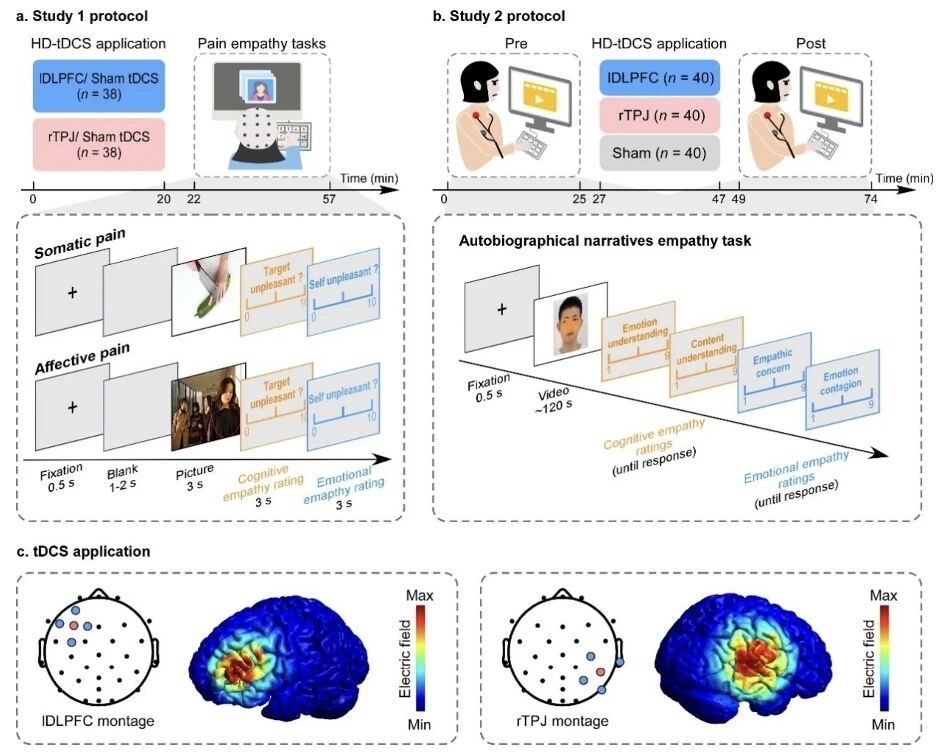
Figure 1. Overview of experimental design and stimulation targets.
3.Research Findings
Multidimensional analyses clearly reveals the distinct roles of the rTPJ and lDLPFC in empathy, further validated by computational decoding.
(1) rTPJ-tDCS Enhances Cognitive Empathy Across Contexts
Both behavioral and neurophysiological analyses consistently indicate that anodal tDCS over the rTPJ significantly improves the individuals’ ability to understand and discriminate others’ emotional states. As shown in Figure 2, in the static pain empathy task, rTPJ stimulation not only significantly enhanced participants’ cognitive discrimination of others’ distress (quantified by the AUC of other-unpleasantness ratings) but also concurrently increased the early and late LPP amplitudes, reflecting enhanced attentional allocation and affective evaluation.
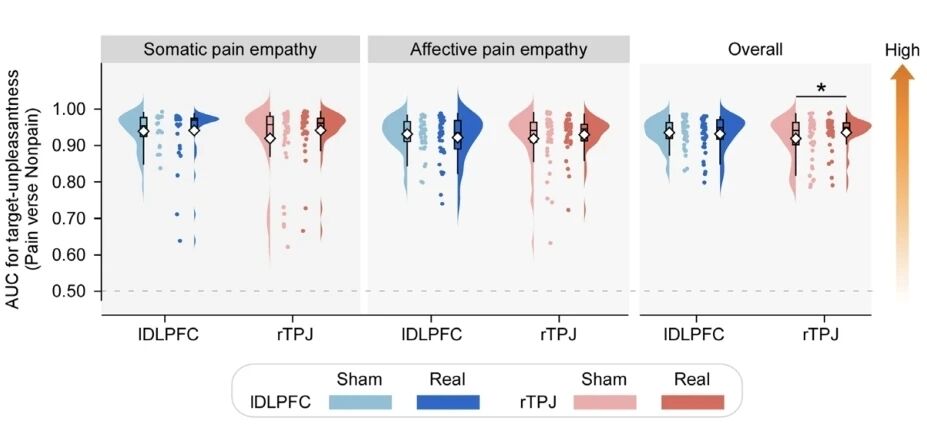
Figure 2. Enhancing effects of rTPJ-tDCS on behavioral ratings in the static pain empathy task
As shown in Figure 3, in the ecologically valid autobiographical narrative task, rTPJ stimulation specifically improved participants’ ratings of content comprehension and emotional understanding. These consistent enhancing effects across different tasks and modalities strongly support that the rTPJ plays a context-general role in enhancing cognitive empathy.
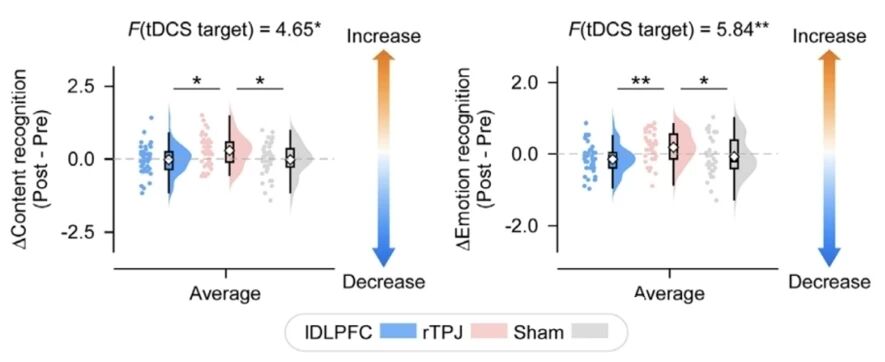
Figure 3. Enhancing effects of rTPJ-tDCS on behavioral ratings in the autobiographical narrative empathy task
(2) lDLPFC-tDCS Selectively Enhances Autonomic Regulation
In contrast to the rTPJ, anodal tDCS over the lDLPFC did not significantly alter explicit subjective empathy ratings. However, as shown in Figure 4, in the autobiographical narrative task, lDLPFC stimulation selectively increased HRV indices, including SDNN, RMSSD, and SD1. The increase of these metrics indicates enhanced parasympathetic activity, thereby improving the flexibility and adaptability of the autonomic nervous system and improved autonomic flexibility. This finding suggests that the primary function of the lDLPFC in empathy lies in facilitating self-oriented emotion regulation, rather than directly altering the cognitive understanding or subjective experience of others' emotions.
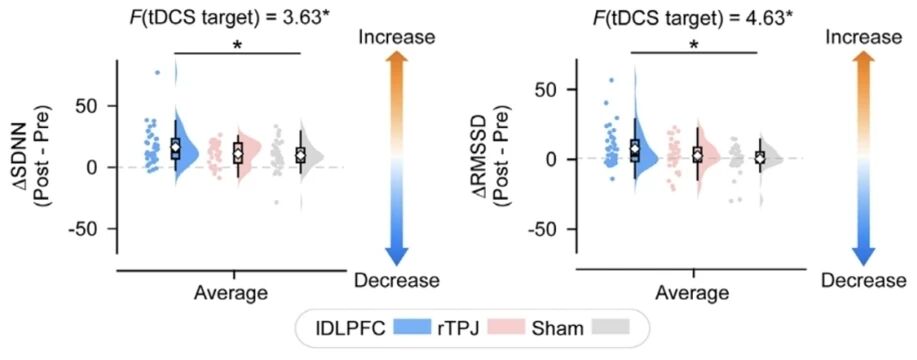
Figure 4. Selective enhancement of HRV indices by lDLPFC-tDCS in the autobiographical narrative empathy task
(3) Computational Decoding Reveals the Impact of Neuromodulation on the Readability of Empathy Signals
This study further employed machine learning to decode targets’ emotional states by integrating behavioral and physiological signals (LPP/HRV), evaluating the “readability” of empathic responses—defined as the alignment between an observer’s responses and the target’s emotional state. As shown in Figure 5 (static pain empathy task) and Figure 6 (autobiographical video empathy task), rTPJ-tDCS significantly improved the decoding accuracy of others’ emotional states, suggesting that rTPJ stimulation enhanced the coupling between empathic responses and external emotional cues, thereby enhancing signal discriminability. In contrast, lDLPFC-tDCS reduced decoding accuracy. The results indicate that while lDLPFC stimulation strengthened internal physiological regulation, this enhanced regulatory capacity may attenuate the overt expression of empathy signals, rendering the empathic state less externally “readable”.
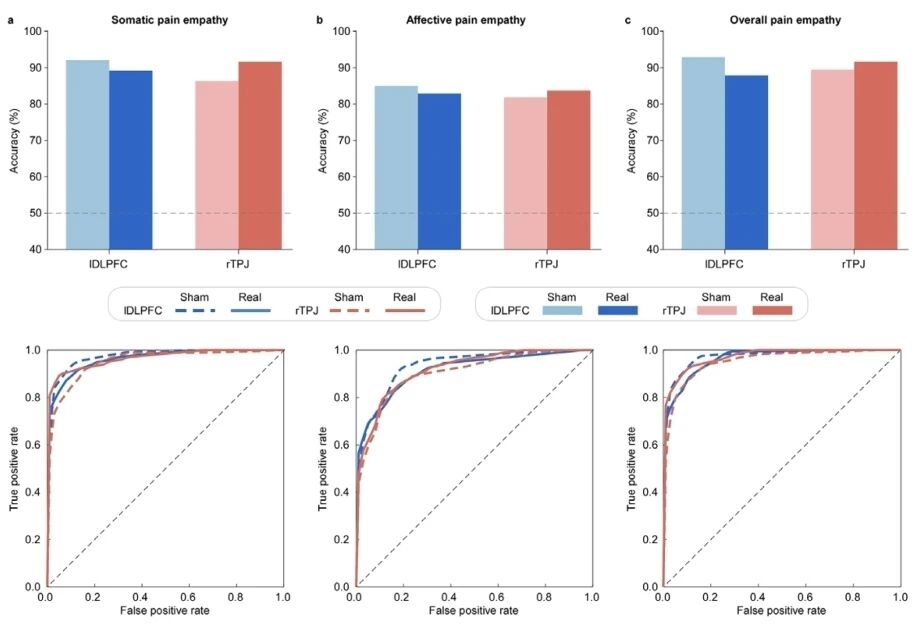
Figure 5. Classification accuracy and ROC curves for decoding targets' emotional states in the static pain empathy task
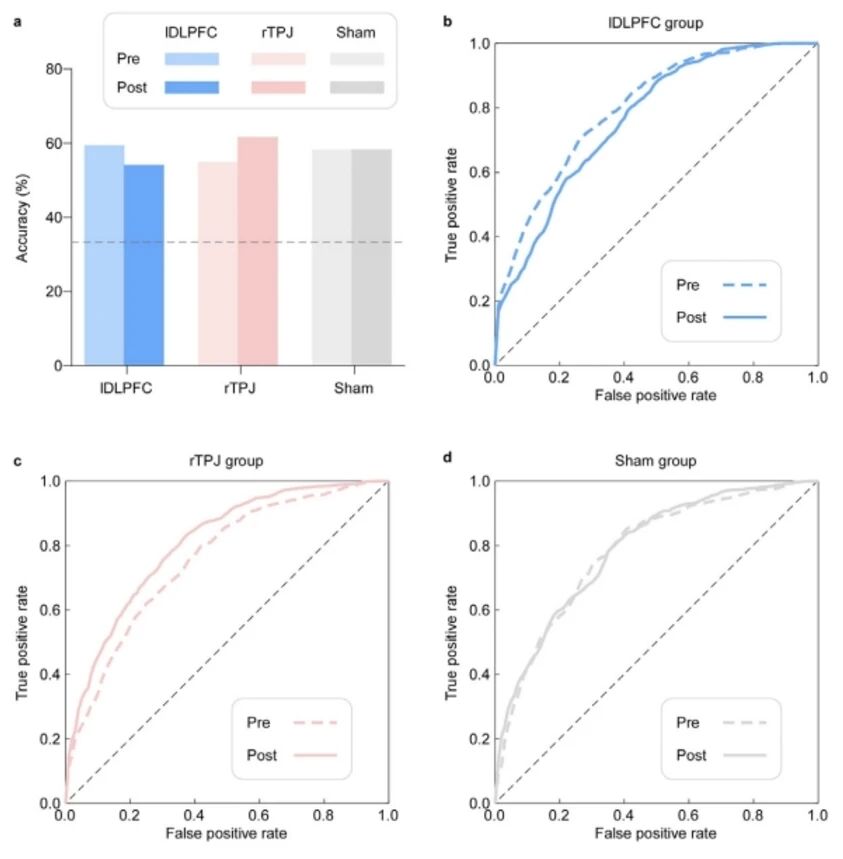
Figure 6. Classification accuracy and ROC curves for decoding targets' emotional states in the autobiographical video empathy task
4.Research Conclusions
Through tDCS modulation, this study reveals the dissociable roles of the rTPJ and lDLPFC in empathy processes. rTPJ stimulation cross-contextually enhances cognitive empathy, promoting the representation and understanding of others’ emotional states. In contrast, lDLPFC stimulation selectively modulates autonomic activity to strengthen self-oriented emotion regulation, without direct impacting explicit empathic experience. Computational decoding further confirm this functional specificity: rTPJ stimulation enhances the “readability” of empathic signals, while lDLPFC stimulation decreases it due to regulatory attenuation. These findings lay a foundation for developing target-specific, precise neuromodulation strategies tailored to distinct empathy-related deficits, such as impaired cognitive empathy or emotional dysregulation.
5.Author Contributions
Prof. Peng Weiwei of the School of Psychology at Shenzhen University is the corresponding author, and Dr. Li Xiaodong, an associate researcher in the research group, is the first author. Important contributions were also made by graduate students Guo Zekun (graduated), Ye Jialin, and Yang Xilin, as well as Prof. Lu Xuejing from the Institute of Psychology, Chinese Academy of Sciences. This study was supported by the National Natural Science Foundation of China, the Shenzhen Basic Research Program, and the Shenzhen University 2035 Program for Excellence Research Plan.
6.References
Li, X., Guo, Z., Ye, J., Yang, X., Lu, X., & Peng, W. (2026). Modulating empathy with tDCS: dissociable roles of rTPJ and lDLPFC. Psychological Medicine, 56, e121, 1–15.