The research team led by Professor Weiwei Peng from the School of Psychology at Shenzhen University has published a research article titled “Dynamic Expectation Strength and Precision Shape Human Pain Perception through Shared and Dissociable α-Oscillatory Mechanisms” in the international academic journal PLOS Biology. From a dynamic perspective, the study decomposed two key components of pain expectation—strength and precision. Combining electroencephalography (EEG) technique, this study further revealed that expectation strength and precision modulate human pain perception through shared yet partially dissociable alpha (α) neural oscillatory mechanisms.
Background
Instead of the merely passive responses to noxious stimuli, pain refers to the outcome of continuous prediction and inference based on past experience. Within the framework of predictive coding or Bayesian inference, pain perception arises from the integration of sensory input with prior expectations. A substantial body of research has demonstrated that expectations about upcoming pain can significantly modulate both behavioral and neural responses to pain.
In natural environment, expectations are not fixed properties of cue identity, instead, they evolve continuously as individuals integrate recent sensory events with prior beliefs. Yet most cue-based pain studies operationalized expectation as a static, categorical variable tied directly to the cue. Such simplifications overlook the inherently dynamic nature of predictive belief updating. Another limitation of current research is its predominant focus on expectation strength, often overlooking the equally crucial role of expectation precision, which determines the relative influence of top-down expectations versus bottom-up sensory inputs. To fill these gap, the current study aims at exploring whether and how expectation strength and precision shape behavioral and neural pain responses.
Methods
Seventy-two participants were recruited and completed a probabilistic cued-pain task. Each trial started with a predictive visual cue, indicating the intensity of the upcoming pain with 75% reinforcement probability. After a jittered delay, a brief laser stimulus with either low or high intensity, was delivered to the left hand dorsum. Two seconds after the pain delivery, participants verbally reported their perceived pain intensity and unpleasantness using a 0-100 numerical rating scale. Continuous EEG signals were recording when participants were engaged in the experimenttask.
A cue-specific leaky-integration model was implemented to characterize trial-by-trial expectation dynamics based on a recency-weighted accumulation of past pain experiences. Thus, trial-wise expectation strength and precision were estimated. Building upon this framework, this study addressed three key questions:
(1)Do dynamic model better capture pain expectations than static cue-based approaches;
(2)How do expectation strength and precision shape both anticipatory and pain-related neural responses;
(3)Are expectation modulations on pain responses mediated vy anticipatory activities.
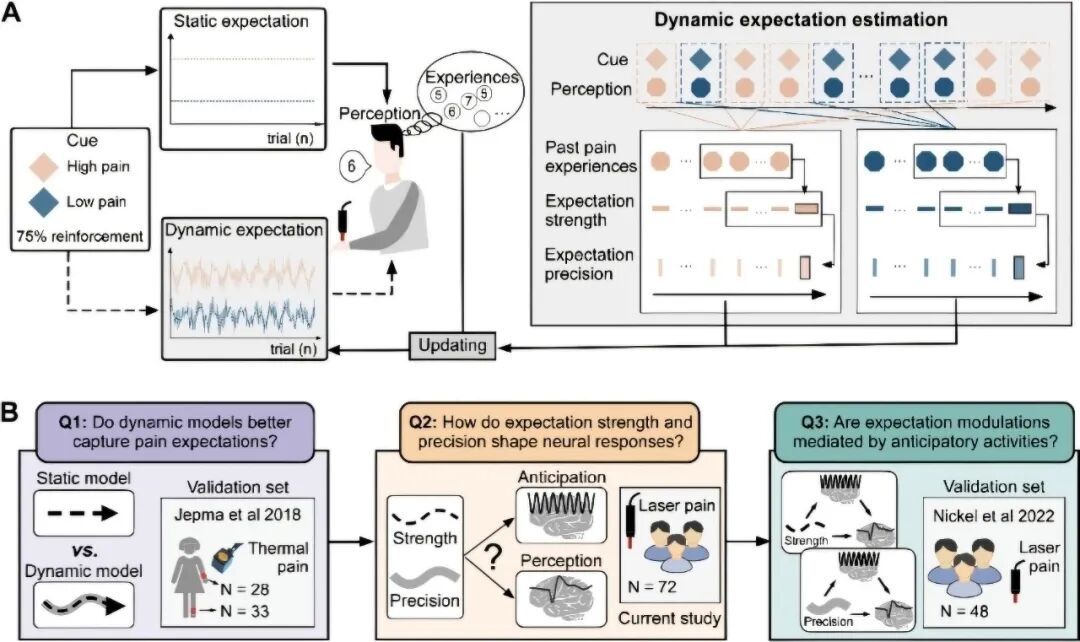
Figure 1. Study design and analysis pipeline.
Results
(1) The dynamic expectation model better captures pain expectations
Results from Bayesian linear mixed-model comparisons showed that, compared with the traditional categorical classification of “high vs. low expectation,” single-trial dynamic expectation strength provided a better explanation of participants’ subjective expectation ratings.
EEG analyses further revealed that expectation strength enhanced, while expectation precision suppressed pain-evoked neural responses, suggesting the hyperalgesic effect of expectation strength while hypoalgesic effect of expectation precision.
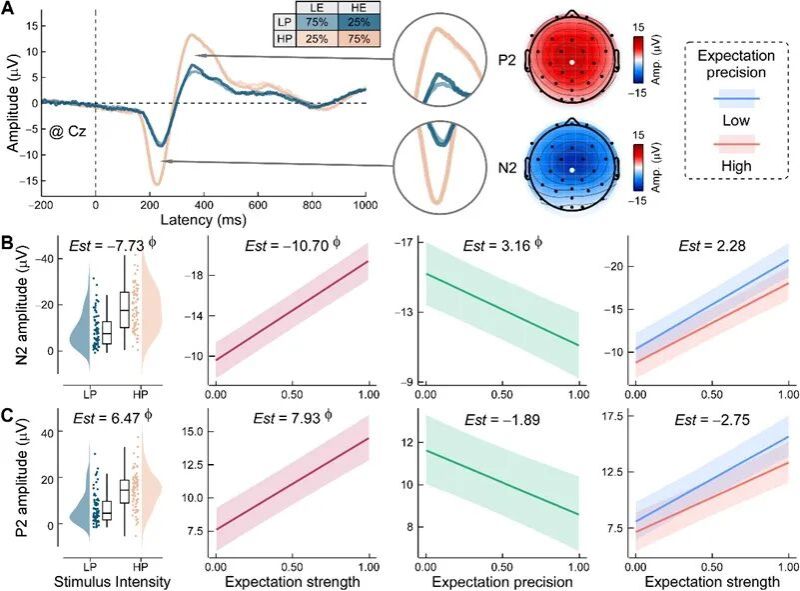
Figure 2. Expectation strength and precision modulate pain-evoked responses.
(2) Expectation strength and precision modulate distinct pre-stimulus anticipatory brain activities
Analysis of anticipatory EEG signals further indicated that expectation strength and precision engage dissociable frequency-specific mechanisms to shape preparatory neural states. Expectation strength was associated with suppressed fronto-central α oscillation, while expectation precision was associated with enhanced α activity at the electrodes around sensorimotor area contralateral to the pain site.
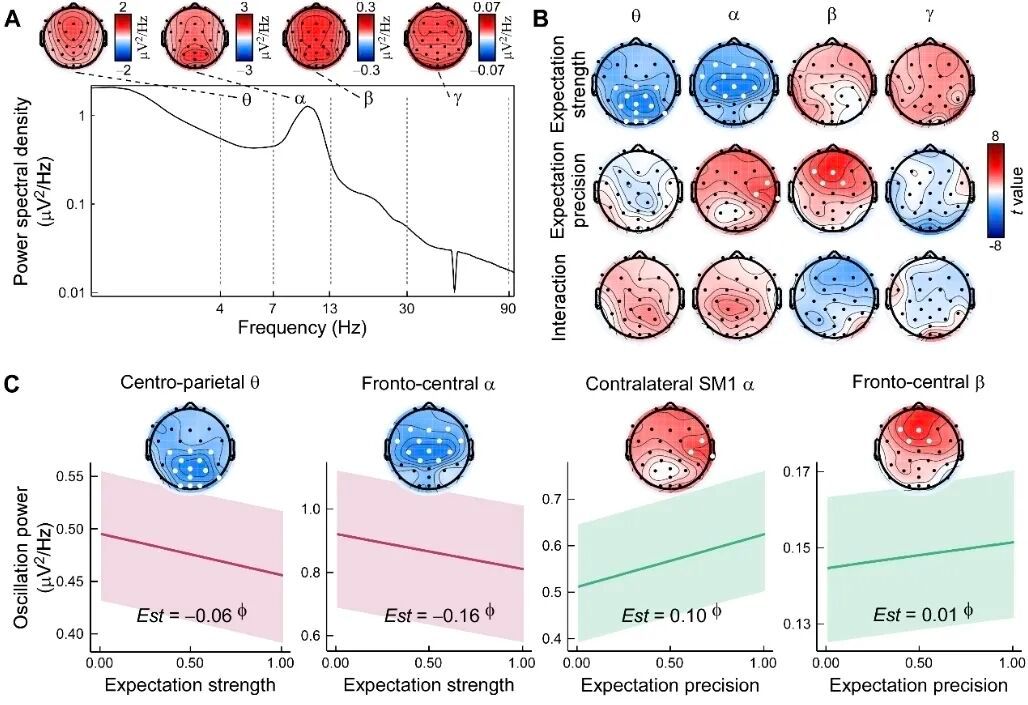
Figure 3. Expectation strength and precision modulated the pre-stimulus anticipatory oscillations.
(3) Pre-stimulus anticipatory α oscillations mediated the expectation modulation on pain
Mediation analyses delineated a frequency-and region-specific architecture through which distinct components of dynamic expectation modulate pain processing via segregated α-oscillatory mechanisms. Specifically, the right-lateralized dorsolateral prefrontal (DLPFC) and sensorimotor (SM1) α oscillations mediated both the expectation strength and precision modulation, the medial prefrontal (mPFC) α oscillation only mediated the strength modulation on pain-evoked potentials.
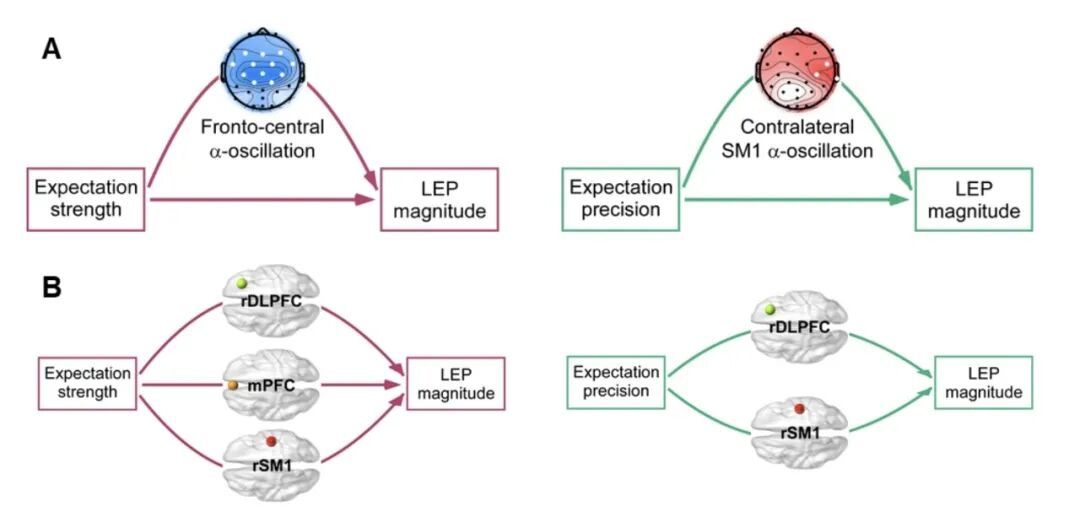
Figure 4. Pre-stimulus anticipatory αoscillations mediated the expectation strength and precision modulation on pain-evoked potentials.
Conclusion
Within the dynamic framework, this study decomposed and quantified the strength and precision components of pain expectation, revealing shared yet partially dissociable α oscillatory mechanisms of their modulations on pain perception. Specifically, α activity within the right DLPFC–SM1 network integrated both both components, with strength-specific engagement of mPFC. These findings deepen our understanding of the cognitive and neural mechanisms underlying pain perception, establish a neurocomputational framework linking dynamic expectations to pain processing, and identify potential targets for future interventions aimed at alleviating chronic pain through cognitive approaches or targeted neuromodulation.
Author Contributions
Professor Weiwei Peng from the School of Psychology at Shenzhen University is the corresponding author of the paper, and Ji Li, a Ph.D. student in the research group, is the first author. Important contributions to this study were also made by Shihao Chen and Xinxin Lin (Ph.D. students), Dr. Lingling Weng (postdoctoral fellow), Dr. Libo Zhang from the Department of Psychological and Brain Sciences at Dartmouth College, and Prof.. Yiheng Tu at the Institute of Psychology, Chinese Academy of Sciences. This research was supported by the STI2030-Major Projects by the Ministry of Science and Technology of China (2022ZD0206400), the National Natural Science Foundation of China (32271105), and other funding sources.
Reference
Li J, Chen S, Zhang L, Weng L, Lin X, Tu Y, Peng W (2026). Dynamic expectation strength and precision shape human pain perception through shared and dissociable α-oscillatory mechanisms. PLOS Biology, 24(3): e3003675.
https://doi.org/10.1371/journal.pbio.3003675