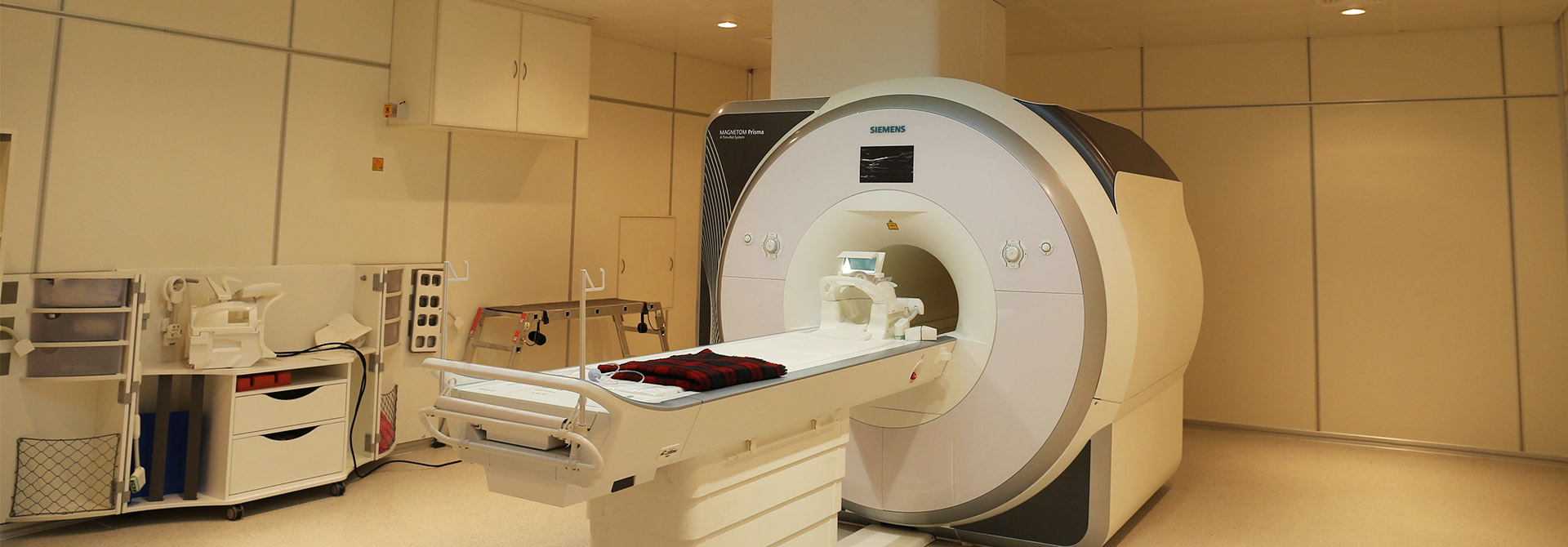
Associate Professor Zhao Shuo’s research group, in collaboration with the Department of Child Psychology and Rehabilitation at Shenzhen Maternal and Child Health Hospital Affiliated to Southern Medical University, has published a research article entitled “Classification of Autism Spectrum Disorder in Children Using EEG Power Ratios Obtained During a Naturalistic Mentalizing Task” in Biological Psychiatry, a leading international journal in neuroscience and psychiatry. The study combined electroencephalography (EEG) and machine learning methods in naturalistic social cognitive tasks, and found that EEG power ratio features can effectively distinguish children with autism spectrum disorder (ASD) from typically developing (TD) children, providing potential neurobiological markers for the early screening of ASD.
1. Research background
Autism Spectrum Disorder (ASD) is a highly heterogeneous neurodevelopmental disorder characterized by social difficulties and repetitive stereotyped behaviors. At present, the diagnosis of ASD mainly relies on behavioral observation and clinical assessment, but due to the lack of professional diagnostic personnel, the optimal time for intervention is often delayed. A large number of studies have shown that ASD is closely related to abnormalities in the structure and function of the central nervous system, so it is important to find objective neurobiological indicators (biomarkers) to achieve early identification. Electroencephalogram (EEG) is considered a potential early screening tool due to its advantages such as non-invasive, low-cost, and suitable for children's research. However, previous research results based on resting EEG are inconsistent, and its diagnostic efficacy is still highly controversial. On the other hand, one of the core social deficiencies of ASD is the impaired ability of Theory of Mind (ToM), that is, the ability to understand the psychological state and intentions of others. Therefore, recording EEG signals in tasks closer to real-world social situations may be more helpful in discovering stable neural markers. Based on this idea, this study uses a natural situation animation video task to explore the differentiating effect of EEG features in social cognitive processing on children with ASD and children with typical development (TD).
2. Research methods
This study used a cross-sectional diagnostic study design and recruited 183 children aged 3–11 years, including 83 children with ASD and 100 children with TD. In the experiment, children wore a 64-channel EEG device and recorded EEG signals simultaneously while watching the social cognitive task in the natural situation of the animated short film "Partly Cloudy" and the subsequent resting state gaze task for about 3 minutes. The animation contains Theory of Mind (ToM)-related plots and non-socially controlled plots, based on which EEG data for corresponding time periods are extracted, and the power spectrum characteristics of the θ (4–8 Hz), α (8–13 Hz) and β (13–30 Hz) bands are calculated.
3. Research results
The results show that among the four EEG feature models, the mental–control power ratio model based on the natural situation ToM task has the best performance, with a classification accuracy of 92.5%, an AUC of 0.98, a sensitivity of 89.3%, and an accuracy of 93.9%. In contrast, the model based on the absolute and relative power of resting EEG performed poorly, with an accuracy of only 54.9% and 51.5%, while the model based on the power difference was 64.7%. These results show that the EEG power ratio between different situations in social cognitive tasks is more effective in distinguishing ASD children from TD children than resting EEG features (see Figure 1).
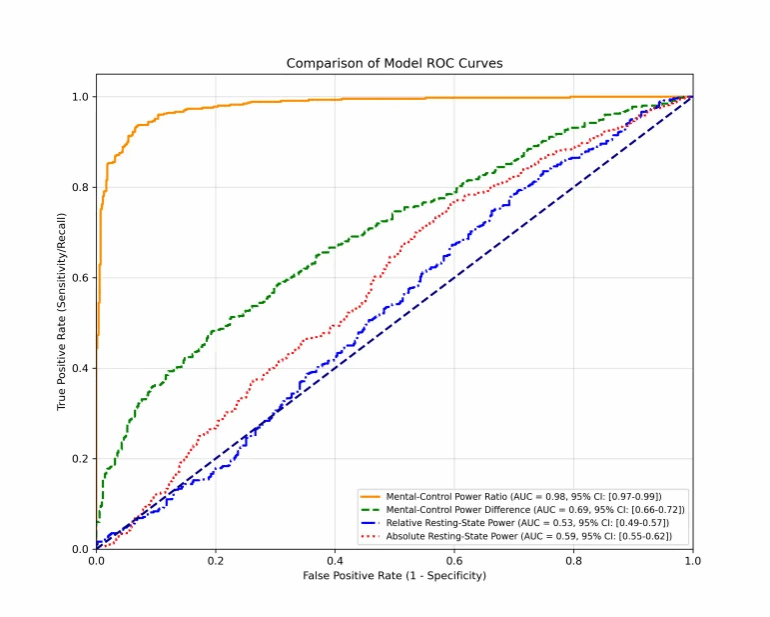
Figure 1: ROC curve of the EEG feature classification model
Further SHAP interpretation analysis showed that EEG features in the frontal lobe and temporoparietal regions contributed the most to model prediction, among which the F2 electrode θ wave power and FP1 electrode α wave power were the most diagnostic indicators. From the perspective of frequency band contribution, theta waves (37.6%) and β waves (36.4%) played a leading role in distinguishing ASD from TD children, while α waves (25.9%) also played an important role, and these features were mainly distributed in social cognition-related brain regions such as the prefrontal lobe and temporoparietal symphysis (see Fig. 2).
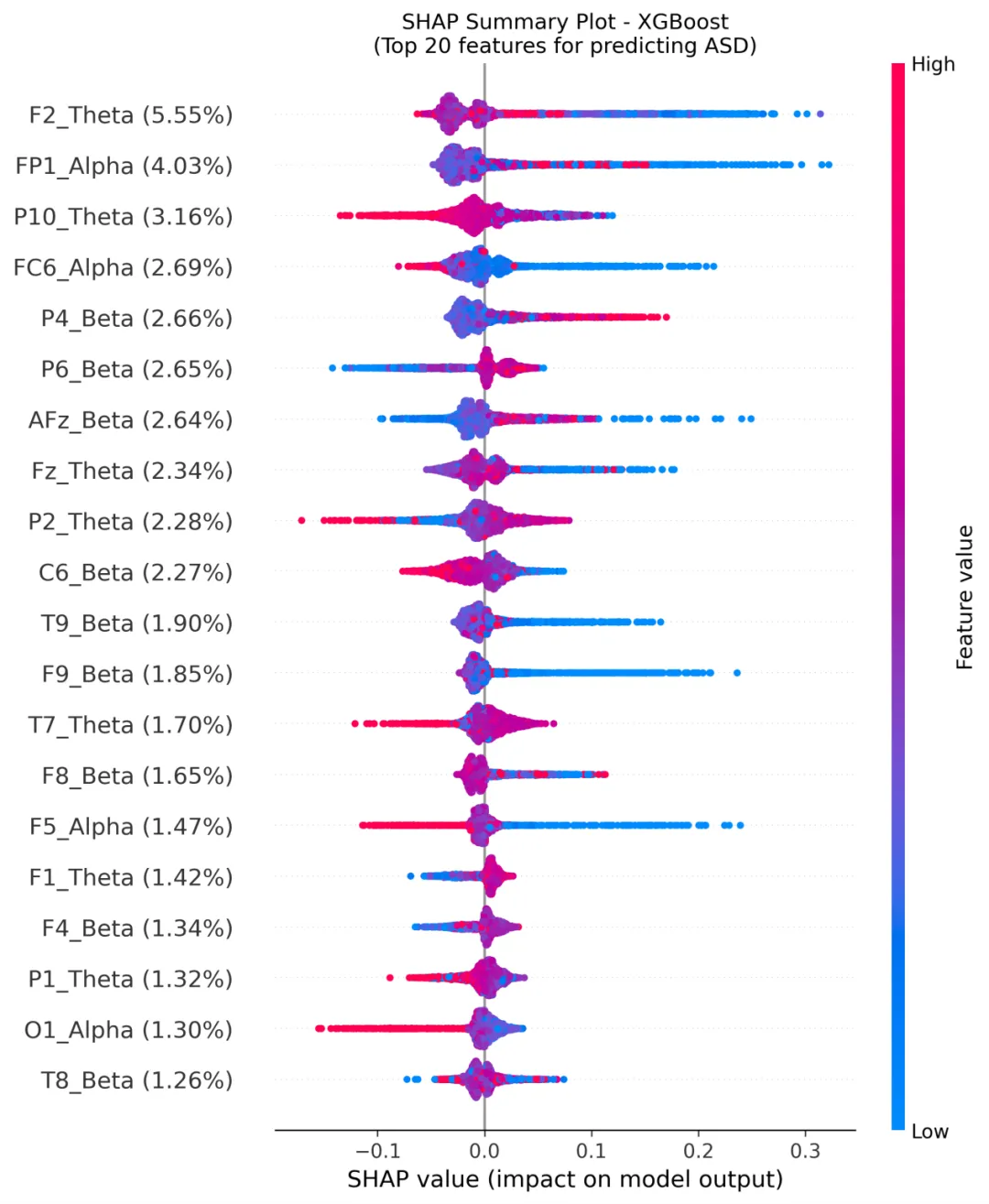
Figure 2: SHAP value analysis for the Mental–control power ratio model
In addition, the results of cross-age transfer learning show that the model trained on older children still maintains high accuracy in predictions in younger children (about 90%–92%), with an AUC of more than 97%, indicating that this EEG feature has good age generalization ability and shows potential value for early screening of ASD (see Figure 3).
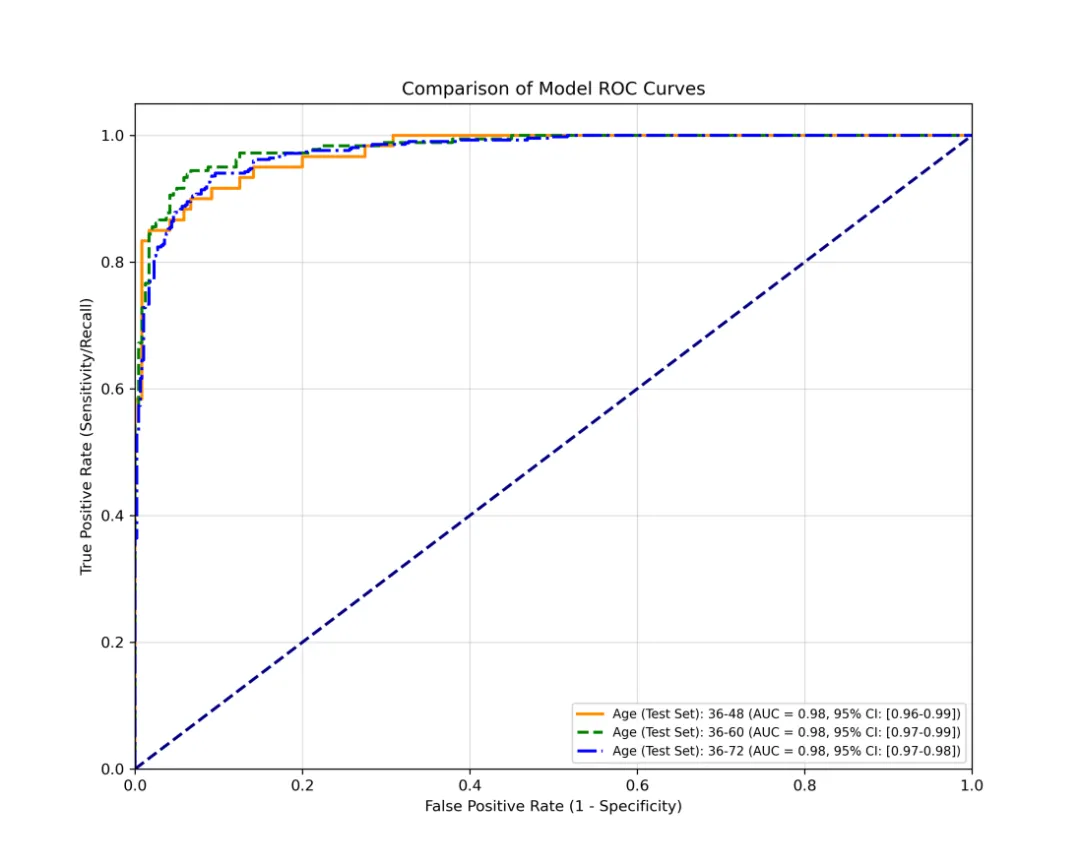
Figure 3: ROC curves for transfer learning models across ages
4. Research conclusions
The study found that, compared with resting-state EEG features, EEG power ratio features obtained from naturalistic Theory of Mind (ToM) tasks more effectively distinguish children with autism spectrum disorder (ASD) from typically developing (TD) children, achieving high classification accuracy in machine learning models. The model also demonstrated good generalizability across children with ASD of different ages, suggesting that social-cognition-related neural features of ASD emerge early and remain relatively stable during development. These findings may serve as an important complement to behavioral assessment in the early screening and auxiliary diagnosis of ASD, and offer a new framework for further exploring the neural mechanisms of the disorder.
5. Author contribution
The corresponding author of the paper is Associate Professor Zhao Shuo from the School of Psychology, Shenzhen University. Co-first authors are Peng Yitong, a master’s student in the research group, and Dr. Sun Binbin, an attending physician in the Department of Child Psychology and Rehabilitation at Shenzhen Maternal and Child Health Hospital Affiliated to Southern Medical University. Director Wang Hong and Director Wei Zhen from the same department, as well as Professor Li Hong from the School of Psychology, South China Normal University, made important contributions to the study. The research was supported by the General Project of the National Social Science Foundation of China (21BYY111).
6. References
Peng, Y., Sun, B., Wang, H., Wei, Z., Li, H., & Zhao, S.(2026). Classification of Autism Spectrum Disorder in Children Using EEG Power Ratios Obtained During a Naturalistic Mentalizing Task. Biological Psychiatry.https://doi.org/10.1016/j.biopsych.2026.02.017